I’ve always believed that if you want to see any town at it’s best, you should stroll around it on a late Saturday morning. As a kid in the late 1980’s, I would wander down to my local high street just to soak up the buzz of the market and the bustling high street. I had the comport of a middle aged man from about the age of 10, so I would spend my last bit of pocket money in an independent retailer, stroll earnestly around town whistling and with my hands linked behind my back, then return home for a pot of tea and perhaps a custard cream if my belt had not gotten too tight over winter.
I have not changed (or evolved) in the several decades since, and so last Saturday morning my fiancée and I went for an earnest stroll around a local town centre in order to soak up the buzz and perhaps purchase something from an independent retailer. Of course, this being 2024, the town centre was a soulless ghost town even at this prime hour, and so for the hundredth time I began lamenting the death of the high street, community and social cohesion. This brought me to the subject of…
The Internet.
It was time to determine conclusively whether it was The Internet that had caused high streets to shrivel to these empty, vape riddled husks. In the process, I would also decide whether The Internet overall had been a good thing or a bad thing, and whether…
…If I was presented with a big red button that ended the internet forever, would I press it?
First, what exactly is the internet? Regardless of the intentions of its creators, what is it actually used for by most people? I settled on just four things.
- Interacting with other human beings.
- Buying things.
- Learning about the world around us.
- Looking at naked people.
If I can work out if each of these four things are now better or worse because of the internet, then I know whether I am pressing the button to end it forever.
Interacting with other Human Beings
Alongside food, water and shelter, humans have evolved a deep rooted, biological need for social connection. If this need is not met, the brain warns us by altering our chemical balance to make us feel lonely, in the hope this will trigger us to reconnect with society.
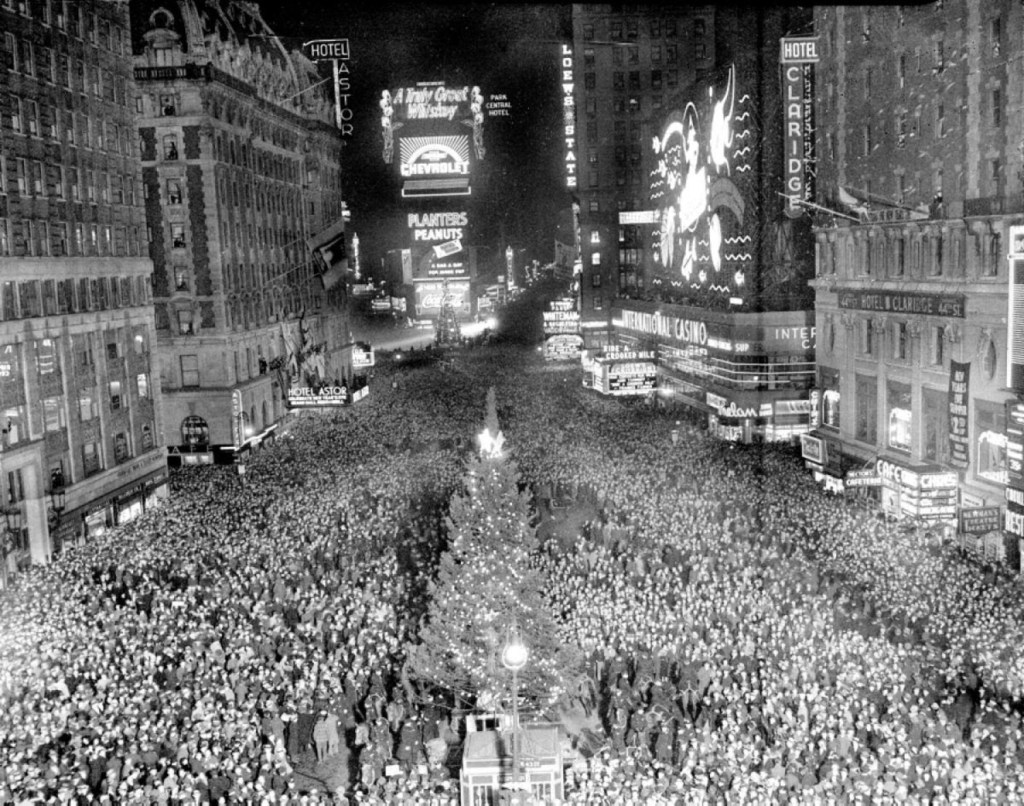
Before the internet and social media, the only immediate way to connect with other human beings was by telephoning them or knocking on their door. If you wanted to connect with lots of human beings (which is really what social connection means), you would have to wander into town. On Saturday you would gravitate towards the centre of your community because you were being dragged there by millions of years of human social evolution (and your friend Michelle). Once there, you would potter, shop, chat and generally be nice to each other.
Then the internet happened, and its inevitable consequence, Social Media. In order to satisfy our biological need for connection, we no longer needed to telephone someone or gravitate toward town. We could connect with the world in our pyjamas. I believe social media is more responsible than online shopping for emptying our high streets. People didn’t only go into town to buy items. They went in order to satisfy their biological need for social connection.
I’d say today’s Social Media is 20% connection with friends and family, 80% platform for misinformation, abuse and bullying.
There have always been mean, racist or deluded people. But for centuries, they were sat in the corner of the pub, ranting and getting into arguments. Social Media hasn’t just enabled these people to connect into networks, it has enabled them to recruit people who in past times would have stayed on the ‘respectful’ side of the fence. To interact with society face-to-face means (to most people) being respectful and polite. Now we have a world of social connection with zero face-to-face contact, so the inner vileness of these angry, deluded people can spew forth and pull previously ‘nice’ people in too.
It’s one thing being exposed to misinformation, cruelty or ostracism when you are a fully formed adult with perspective and a robust sense of self. But it’s another when you are young and your self-belief or perspective are not yet fully formed, and the thought of being ridiculed or ostracised from that critical social connection by your peers feels like a matter of life and death. Tragically, it often turns out that way.
Now, there is good in social media too. We can stay in touch with family and old friends in a way we never could before. There are people who would previously have found it difficult to interact with others but now easily can. Groups for people with disabilities to connect, for people who are lonely, for people suffering mental health conditions. On my part, I had severe social anxiety from the age of 18 and thought I was the only person on the planet who went purple and began sweating whenever someone spoke to me. Via the internet, I discovered it was a known condition. I stopped hating myself and the symptoms slowly reduced.
The internet, and its offspring Social Media, can help people overcome loneliness and live richer lives. However, when you consider the culture wars raging across the globe, teen suicide rates, empty high streets and the fact millions of people believe we live on a rotating disk inside a massive dome…
…interacting with other human beings is WORSE because of the internet.
Buying things
I came into this one with deep conscious bias. My very soul wanted to conclude that buying things is worse because of the internet. That the purity of a transaction between yourself and a rosy-cheeked independent trader could never be matched by clicking BUY on your iPhone. After all, an iPhone could never greet you with a cheery ‘Good Morning’, ask after your Mother-in-law’s health nor offer a foreboding weather forecast as you pay for your goods. (Actually, iPhones can probably do all these things now.) But, most important for a Guardian-reading, tofu-eating, wokerati wanker like me, buying a pair of Gentleman’s Trousers from an iPhone is unlikely to help keep a roof over its head and its children in good shoes.
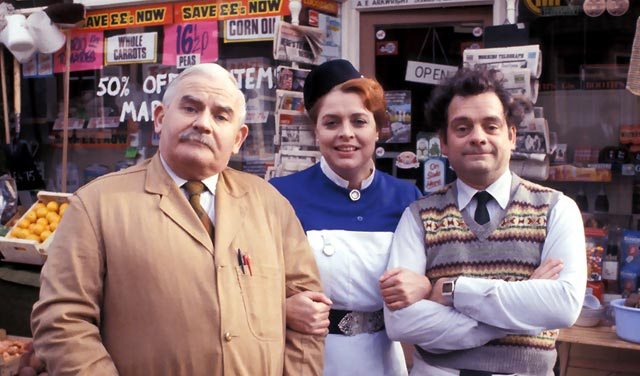
But my heart was ruling my head. It’s true that face-to-face transactions are more enjoyable, and there is more excitement in walking out of a shop with a nice book or shirt in a carrier bag than in receiving the book or shirt from a harried delivery driver while standing in your pyjamas on a Tuesday morning. But today, because of the internet, you can buy ANYTHING you want!
When I decided to take up Mongolian Throat Singing after a deeply moving, twelve hour one-woman play at the Tonypandy theatre of recycled arts, I had an instruction DVD delivered within eight hours. When I decided to surprise my fiancée on her birthday by binning off the tool shed and replacing it with a home-made wooden art installation depicting our love through a series of isosceles triangles, I had a hundredweight of sustainable bamboo delivered in thirty six hours. One day after my fiancée’s birthday I was able to receive a flatpack tool shed without even leaving the house.
Face-to-face shopping has a certain purity, and I lament the death (or grave illness) of the high street as much as anyone. But as stated above, I believe Social Media is the true cause of this sad decline.
In a hybrid world which had online shopping but no social media, I believe high streets would retain much of the bustle and glow they once had simply because we would once more gravitate towards them in order to feed our biological need for social connection. They would just contain fewer department stores than days gone by, and more cafes, coffee shops and cinemas. And in this hybrid world, we could still buy anything on the planet and have it delivered within days. So, with a heavy heart, I come to the conclusion that…
…buying things is BETTER because of the internet.
Learning about the world around us
Like many, I’ve been addicted to information my entire life. When normal kids were out playing on Sundays, I was at home ingesting every last word of my parents’ Sunday Times. Another word for this desire for knowledge is curiosity. Curiosity is the human brain finding it has a gap in it’s knowledge and then panicking. Filling this gap will be rewarded by a dopamine hit.
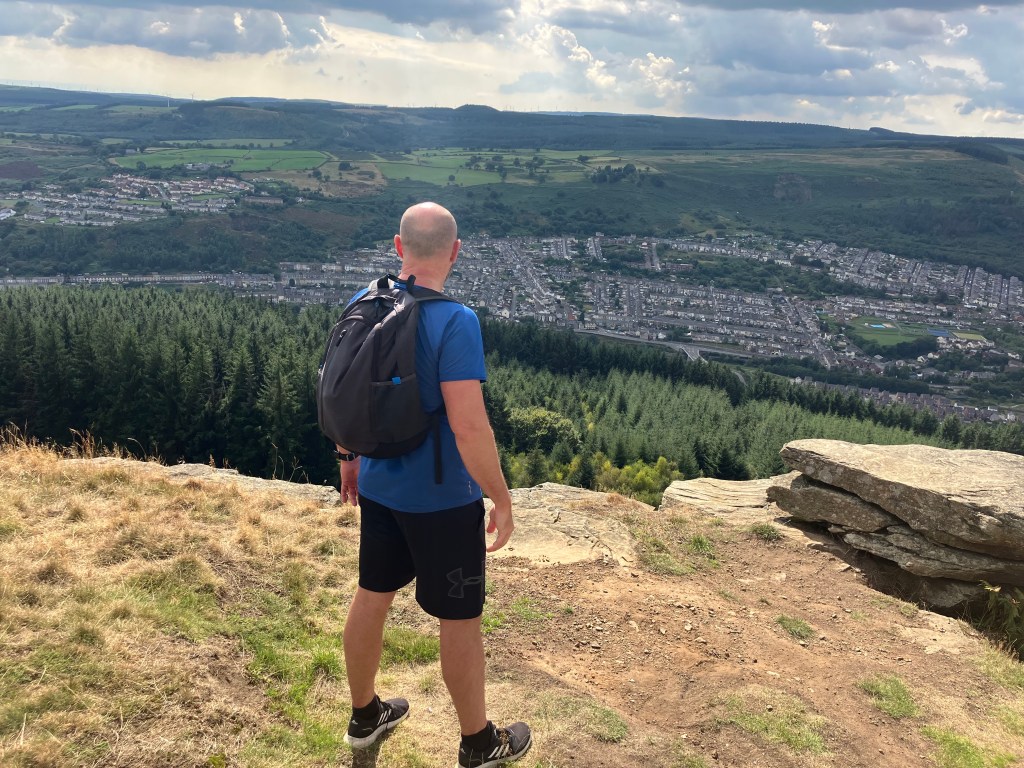
My long suffering fiancée and I will be out for a stroll on the Taff Trail and I will stop at some rusting piece of iron water pipe peeping out of the hedge, or at a set of ancient stone steps leading to nowhere on the hillside, and start rubbing my chin. To my fiancée’s chagrin, we will not be able to carry on the walk until I have gotten my dopamine hit by finding out a) precisely what the pipe or steps were used for, b) when they were built, c) when they were decommissioned and d) what alternative arrangements were put in their place. If YOU are a long suffering partner, you may recognise this behaviour.
Newsagents were like golden bazaars to me with their thousands of pages worth of dopamine. Sitting down with a crisp, never-opened newspaper or magazine and reading it from cover to cover had a kind of magic. It was a contained, structured experience. If you wanted to find out what happened in the world yesterday, you would open the newspaper, then read it, then close it. Then get on with your day, safe in the knowledge you have consumed a representative capsule of what happened in the world yesterday.
Nowadays, we find out what happened in the world yesterday from the internet. But the internet is not a contained capsule of knowledge that you can consume before getting on with your day. It is a vast, borderless universe of information. You can click into it at 7:30am on a Sunday and find yourself still floating directionless around it at 1:30pm, oddly grouchy and full of ennui. You will finish only a few of the articles you read. Why would you finish them when there are 17 billion other articles to read and so little time? Eventually you stagger away from the laptop, but rather than gaining a representative capsule of what happened yesterday, you have gained only a few misty snippets because you clicked around so listlessly.
There is more information and knowledge at our fingertips then ever before. But we used to consume our knowledge in crisp, singular chunks that we could hold in our hands and then ceremoniously close to get on with our day. Now we waste great chunks of our day finding out absolutely nothing, and the dopamine overload makes us grouchy. There is no doubt in my mind…
…learning about the world around us is WORSE because of the internet,
Looking at naked people
Being able to see a naked woman was practically impossible as a boy in the 1980’s. In theory, you could attempt a hurried glimpse at the inside of a porn magazine in a newsagent, but the top shelves were either too high or too well marshalled by the eagle-eyed Newsagent… Who probably knew your parents… And would undoubtedly ring them and tell them what you’d done the moment she banished you from the shop. If you told a 1980’s boy, let’s call him Billy, that he could have a small T.V in his pocket and could press the TV screen a few times to look at any one of a million naked women at any time, Billy would not just agree to this arrangement but would probably clean spark out cold at the thought of it.
What Billy would not understand is that the impossible rarity of seeing naked women in the 1980’s will mean that when he gets older and has girlfriends and then a wife, there will be a mind boggling, pathetically grateful thrill that comes with your girlfriend or wife taking off their clothes. And you never really lose that. You never really stop shaking your head in silent wonder that here is a woman who is taking her clothes off right in front of you, and you are ALLOWED to look! Nobody is going to ban you from a newsagent or ring your parents to say you looked. I don’t know what it must be like to be a young fella in 2024, but I read lots about society and culture and have gleaned that young fellas no longer benefit from that disbelieving joy of getting starkers with your partner.
Far from eye-popping gratitude, it seems there is now a kind of dangerous entitlement among sections of men. That they have gained inflated expectations of what women should even look like (regardless of their own imperfections), and that the safety of women has been compromised. There may be other things at play too, but it seems that having the entire grim, illusory world of pornography available on your phone and laptop, at any time of the day or night, has meant a degradation in attitudes towards nakedness from the euphoric genuflecting of yesteryear to a blasé, mean-spirited judgementalism.
Billy is better off. And so are his future girlfriends. Yes, bizarrely enough…
…looking at naked people is WORSE because of the internet.
That’s it, I am pressing the big red button. The internet is dead forever and one day you will thank me!
Postscript: It is now ten years since Phil Hamer, an obscure screenwriter in South Wales, somehow turned off the internet forever. Let’s examine the repercussions. Obviously, the 98 airliner crashes that happened immediately, killing 16,721 passengers, were a bad start. The crash of the global financial system hours later, which led to recession, chaos, lawlessness and looting across the planet for many months, were also a regrettable outcome. It was agreed by many, including Hamer himself, that he ought to have given everyone a few months’ notice really.
It is worth examining the world that eventually sprung from the chaos. Scientific progress slowed dramatically, with negative implications for medical treatments and research into incurable disease. Technology ground to a halt. The major tech companies were wiped out, with trillions of pounds and thousands of jobs lost. Jeff Bezos reacted to the incident by setting up Amazon Mail, a global postal service delivering letters across the globe in under a week, although his controversial ‘Zero Pay’ contracts led to the business failing within 12 months.
Elon Musk reacted differently, appearing simultaneously on every television set across the globe and demanding ‘One TRILLION Dollars, or I will send rocket missiles into every city on the planet!’ Fortunately, his rockets exploded on take-off, sending his mountain lair crumbling into the sea. Mark Zuckerberg shut down the second the internet stopped, and can now be observed in the New York museum of technology.
The global economy has shifted to the services needed in the new world. For every job lost in tech and online shopping, two jobs were created across postal services, newspapers, magazines, travel agencies and telecoms. Extended families have gravitated to live geographically closer. Town and city centres are now hubs of social connection.
People have less money now than ten years ago. Indeed, the number of billionaires has shrunk from over 3,000 in 2024 to just a few today. The number of millionaires has shrunk from 62 million to just a fraction of that. As the number of material objects we can afford decreases, the value we place on communication and community increases. ‘Knock My Door’, the global initiative set up by a group of students in Sweden in 2029, has been a roaring success. Every town and city has hundreds of ‘KMD’s’ who volunteer to visit people who are unable to easily travel, whether through disability, medical conditions or mental health issues.
Finally, in a societal behaviour change that has baffled sociologists and psychologists alike, 97% of young men now cannot believe their luck when a woman agrees to go out on a date with them.


 Phil Hamer Screenwriter
Leave a comment